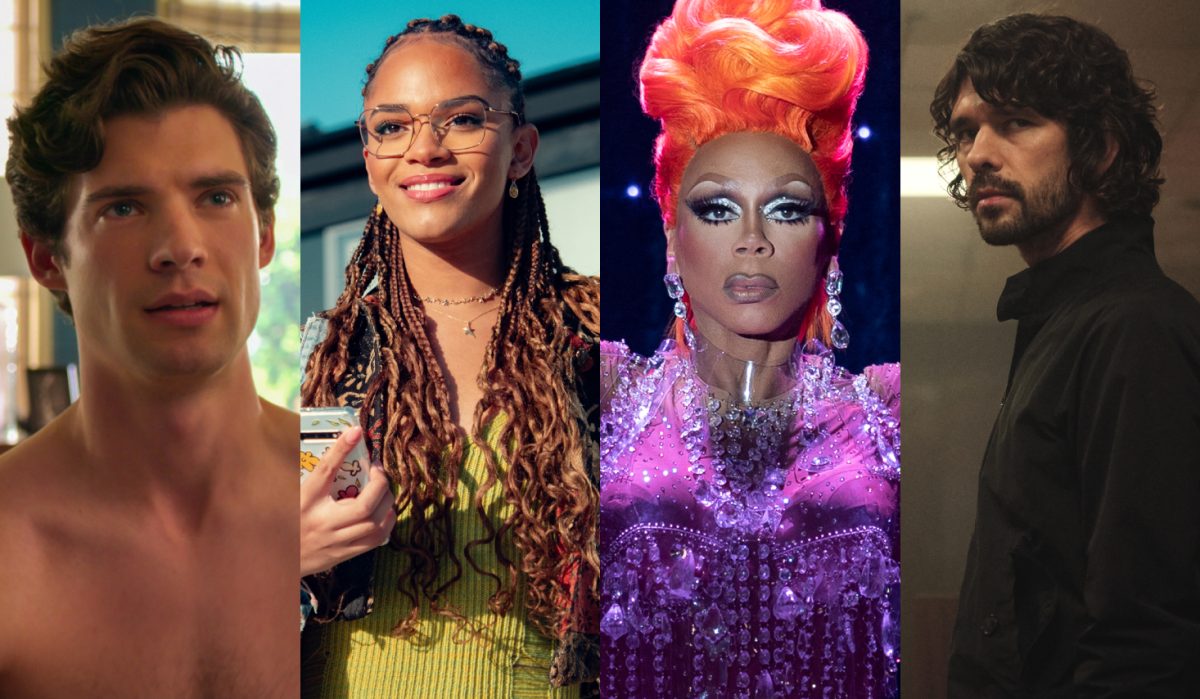
In older pieces of media like The Fresh Prince of Bel Air, Friends, and Seinfeld, being gay was almost always looked at as an uncomfortable topic of conversation or something that wasn’t always quite understandable. Almost as if the characters, when mentioned, were trying to dance around the thought of it. Now with modern TV shows and movies, it’s an exciting plot to have a character of such inclusivity. Like in shows like Rachel Sennott’s HBO Max original I Love LA, Hulu’s Adults, and Benito Skinner’s Amazon original Overcompensating, which follows college freshman Benito navigating his closeted life. It’s a refreshing feeling to have stories on the big screen that people can finally relate to.
Having this kind of representation is so important, especially for young teens trying to understand their identity. Growing up in a world where even still, based on certain parts of the U.S. where it can be a little bit more conservative, it might not be 100% acceptable in some families. It’s fundamental to young LGBTQ+ members because it helps with validation as well as self esteem. Seeing someone on screen go through the same struggles as the viewer might be going though, then seeing that in the end the character is finally able to be themselves around the people they love is crucial to building a healthy self esteem. It can also play a role in forming ones identity: if someone is basically questioning their sexuality and they don’t fully have the resources to grasp a better understanding at what being gay fully means, seeing someone in their favorite movies or shows experience the same thoughts and feelings that they do can be helpful in understanding fully who they are. Lastly, it squashes the feeling of isolation and poor mental health in general that young queer people feel at some point in their life. Seeing people go through the same struggles that they do solidifies the fact that they’re truly not alone.
Not only does it help gay people finally feel seen after years of oppression, it helps straight people finally gain understanding and provides valid experiences to sympathize with. It normalizes queer identities to people who might have never really had any people in their life that are gay, as well as builds empathy through listening to the characters stories and hearing what they’re going through.
Whether we notice it or not, whether articles are written on it or it goes completely unnoticed, queer identities are surrounded by us on the daily. Especially in some of our favorite pieces of media and arguably the most popular at that. Jennifer’s Body explores female desire through bisexuality, Shameless deals with 7 different queer story lines, and Disney Channel’s original series Andi Mack made history for having it’s first openly gay character, Cyrus, even premiering a coming out episode during the second season. These examples just barely skim the surface.
To gain a better understanding at what having LGBT representation in media means to members of the community, we interviewed some fellow queer classmates to collect different perspectives. Senior Makayla Koenen says “I think queer representation is important in media because I think it really helps younger people, or like, even if they’re older, it helps them understand that it’s okay and it doesn’t make them weird, it’s normal and they still fit within a group of people that resonate with what they go through. A good example of this would be in the newest season of Stranger Things, Robin gave this speech to Will, saying that the feeling of finally being able to accept yourself feels like flying”. MJ Bethea says “Queer representation is so important because it shows that it’s okay to love yourself and to accept your differences because that’s what makes us human. The show Steven Universe is a really good example of how all different fusions are proud to be shown off, to use their powers and they didn’t make it something that felt like it needed to be hidden or shunned away”.
As media continues to evolve, so does the responsibility of creators to tell stories that reflect the world we actually live in. Queer characters are no longer just background jokes or misunderstood side plots, they’re complex leads, best friends, siblings, and heroes whose narratives matter. And while the journey toward full inclusivity is far from over, the progress we see today shows just how powerful authentic representation can be. It’s proof that film and television aren’t just forms of entertainment; they’re cultural tools that shape how we view ourselves and each other. By continuing to uplift queer voices on screen, we move closer to a world where everyone, regardless of identity, can feel seen, valued, and understood.